A Whisky Distilled 2.81 Times Led Me to Scotland's Best Designers
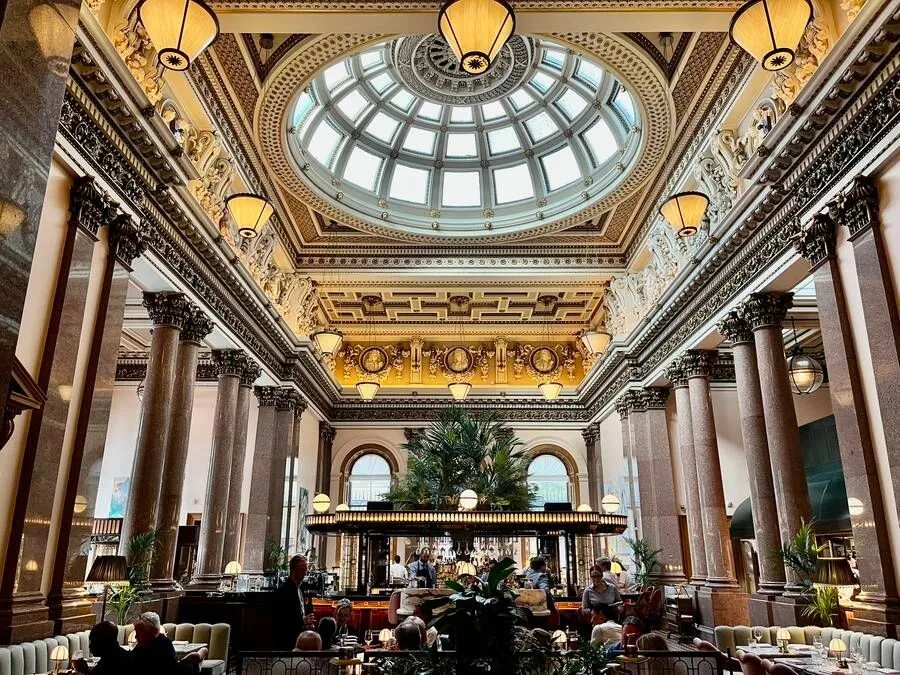
The rain had just stopped falling on Edinburgh's St Andrew Square when I stepped into Gleneagles Townhouse, the city sister to Scotland's legendary Perthshire estate. The building—once home to the British Linen Company and later the Bank of Scotland—still bears the magnificent Corinthian columns and soaring ceilings of its banking days. But tonight, it would serve as the starting point for a journey through Scotland's most exciting creative landscape, guided by an unexpected patron: Mortlach, the Speyside whisky known to connoisseurs as "The Beast of Dufftown."
This was not your typical whisky-tasting sojourn. Mortlach's "Scotland by Design" experience had gathered a small group of design devotees for an immersive exploration of the country's contemporary makers—artisans, architects, and visionaries who are redefining what it means to create in Scotland. The journey would take us from Edinburgh's creative hub of Leith to the remote Cairngorm mountains, from centuries-old archives to avant-garde studios, all while sipping what many consider Scotland's most complex single malt.
A New Chapter in Leith
The next morning, we descended into Leith, Edinburgh's historic port district, where the world once met Scotland, and Scotland met the world. Today, that tradition continues at Custom Lane, a collaborative creative hub conceived by the award-winning architecture studio GRAS. Occupying part of Scotland's oldest Custom House (built in 1812) overlooking the Water of Leith, the space hums with the energy of designers, photographers, and makers.
"Leith was historically a place of making and commerce," explained Gunnar Groves-Raines, who runs GRAS with his spouse Dieny Itoe. The couple, two of Scotland's most driven young creatives, have transformed the previously inaccessible building into a vibrant center where you can watch Williams & Johnson roast coffee, browse exhibitions at the gallery, visit the Edinburgh Tool Library—the UK's first tool-sharing library—and catch a glimpse of the rising stars working in the studios above.
Among those stars is Juli Bolanos-Durman, a Costa Rican-born, Edinburgh-based glass artist whose sculptures and totems are crafted from found and donated glass. Her work, recently exhibited at The Scottish Parliament, speaks to craft's role in contemporary life with an eloquence that transcends language. Nearby, Alistair Byars—a first-class MA graduate from Glasgow School of Art—creates furniture and tableware inspired by music and soundscapes, his work possessing an almost synesthetic quality.
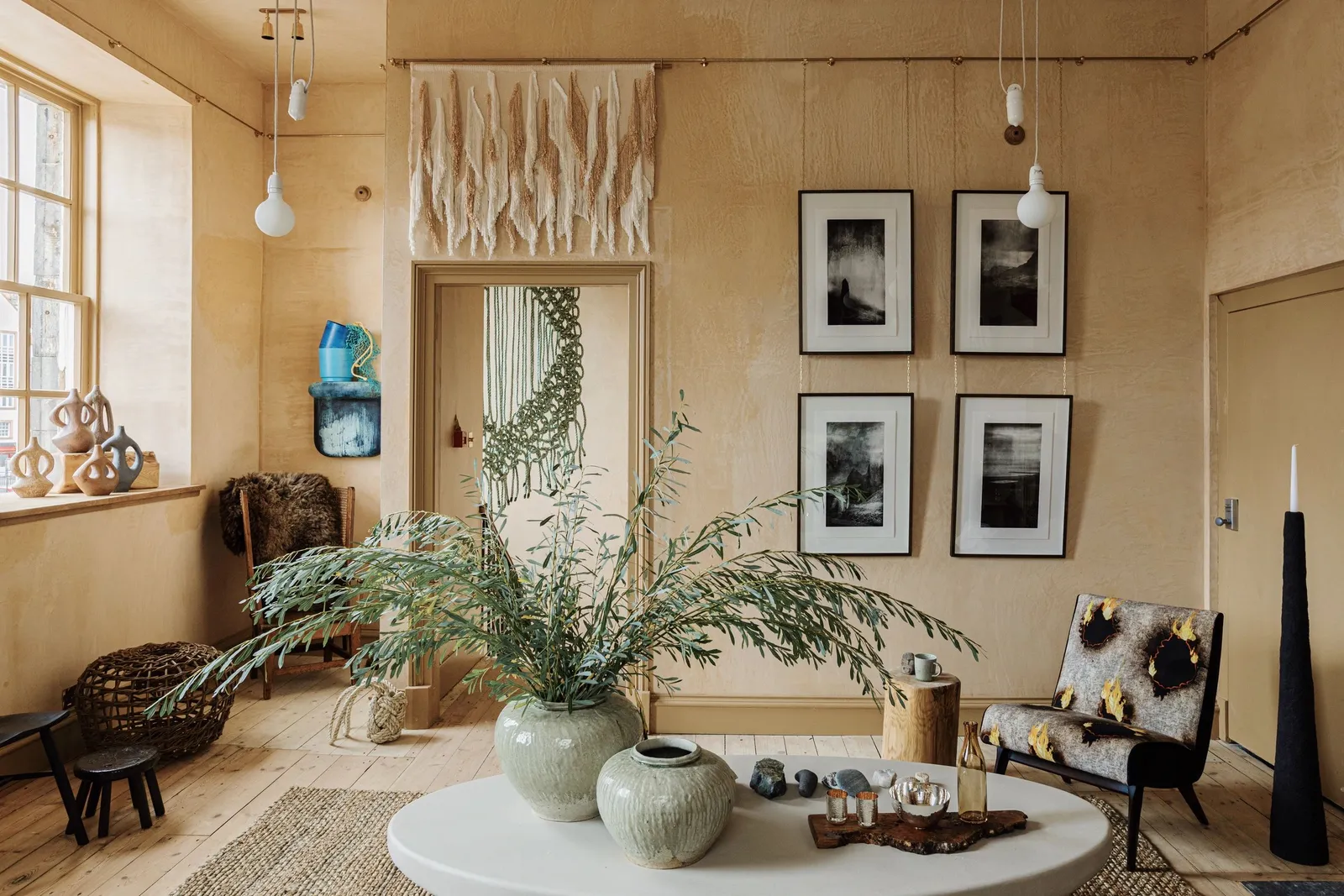
Just steps away, we discovered Bard, the gallery and shop founded by husbands Hugo Macdonald and James Stevens. The space, which opened in November 2022, showcases the work of more than 35 contemporary Scottish makers and designers. Macdonald, a former design editor of Monocle and brand director of Ilse Crawford's Studioilse, grew up on the Isle of Skye and is heir to the high chiefship of the Macdonald clan—Scotland's oldest and largest. Stevens is an architect formerly of London's Retrouvius, whose clients have included Helena Bonham-Carter, Eddie Redmayne, and Bella Freud.
"It's time we moved the dial forward on Scottish-ness being represented by tartan tat and ginger wigs, made nowhere near Scotland."
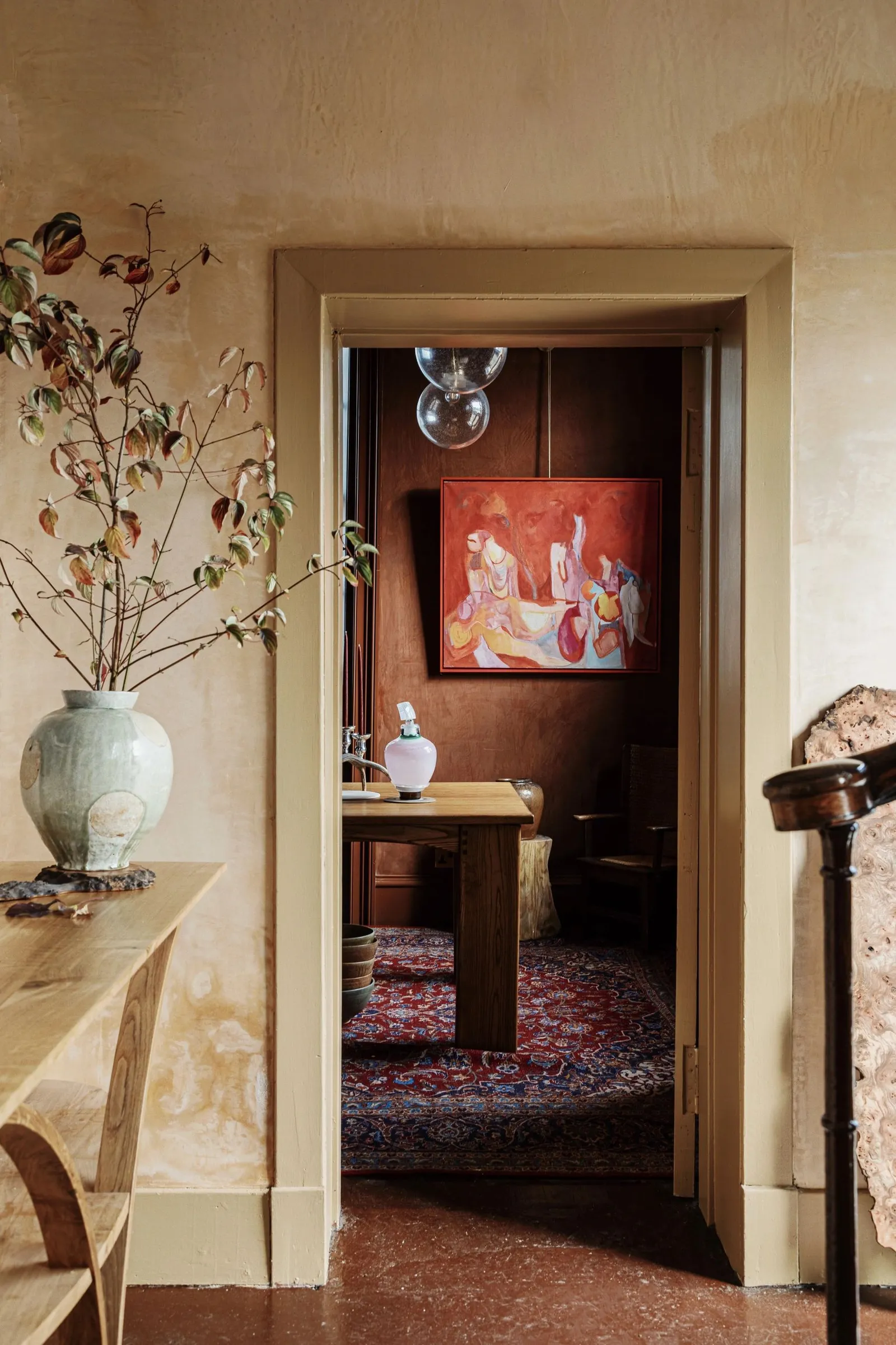
Their vision for Bard is nothing short of revolutionary: to present Scottish craft in a way that feels like wandering through the home of an avid collector. Over two floors, the rooms overflow with objects spanning ceramic, glass, textile, leather, stone, wood, willow, silver, sea plastic, seaweed, and even 3D-printed plastic waste. Before opening, the couple spent three months touring Scotland—from the Borders to the Western Isles, from Orkney and Shetland down through the Cairngorms and Perthshire—visiting over 60 homes, studios, workshops, and factories.
The result is an extraordinary collection: Begg x Co cashmere from Ayrshire, where craftspeople have been weaving since 1866; woven willow from All About Willow on the Isle of Eigg; traditional straw-backed chairs from The Orkney Furniture Maker; and the provocative printed textiles of Timorous Beasties from Glasgow, whose "Glasgow Toile" reimagines the pastoral French tradition with high-rise flats and urban street scenes.
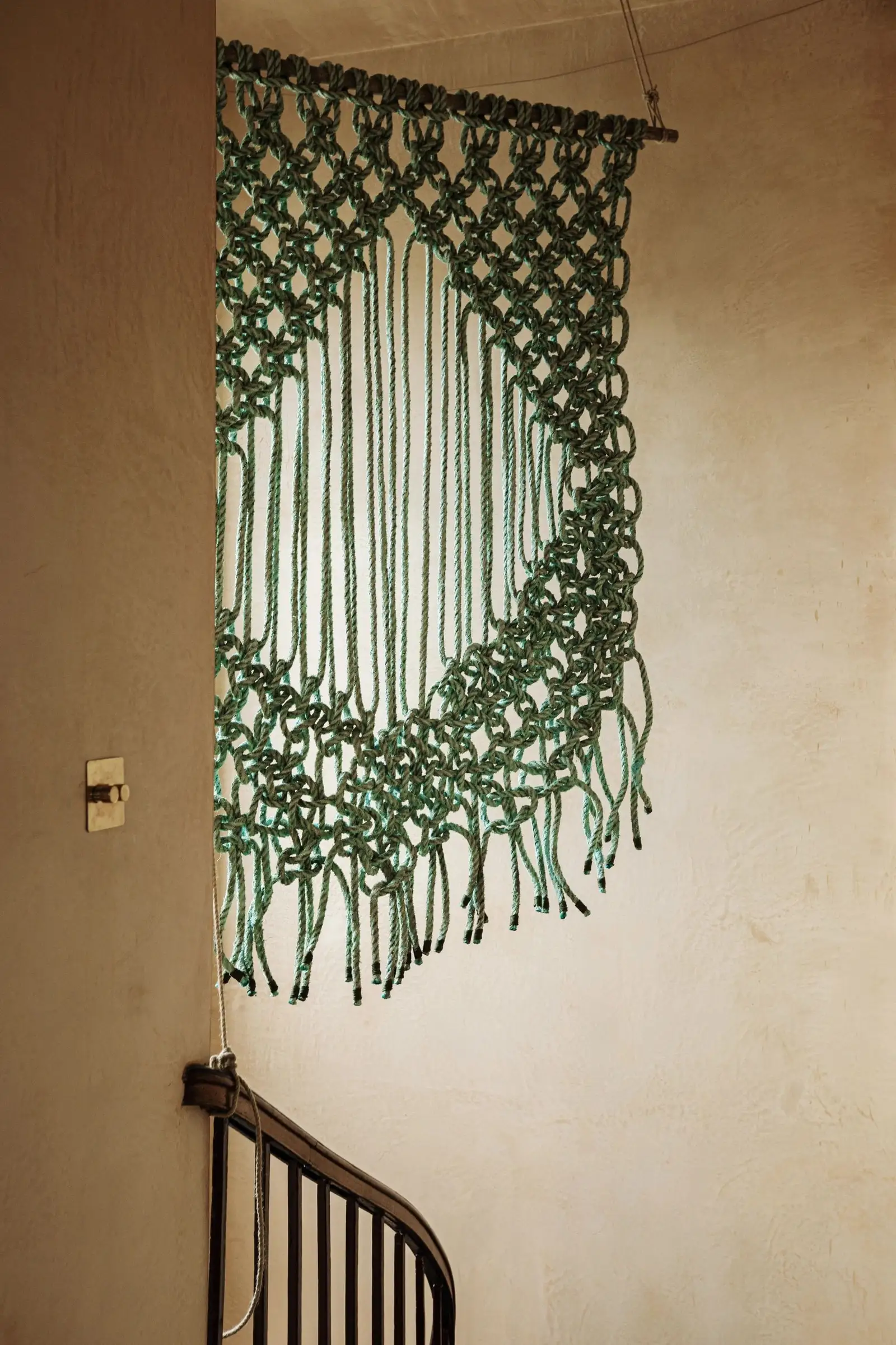
Perhaps most striking is the work of Jasmine Linington, who has developed a unique textile application using seaweed she harvests from beaches near Edinburgh. Her kelp sequins and seaweed-dyed fabrics represent a kind of alchemy—transforming what washes up on Scottish shores into something worthy of haute couture. "Bard is a cultural project, not just a commercial one," Stevens explained. "We wanted to find out what was being made in Scotland, where, by whom, and how. We also wanted to find out why—asking what inspires and motivates people to make today."
Into the Heart of the Beast
The following day, we drove north into Speyside, the whisky heartland. Our destination: the Diageo Archive in Menstrie, where the company's master archivists guided us through centuries of Scottish distilling history, with particular attention to Mortlach's singular story.
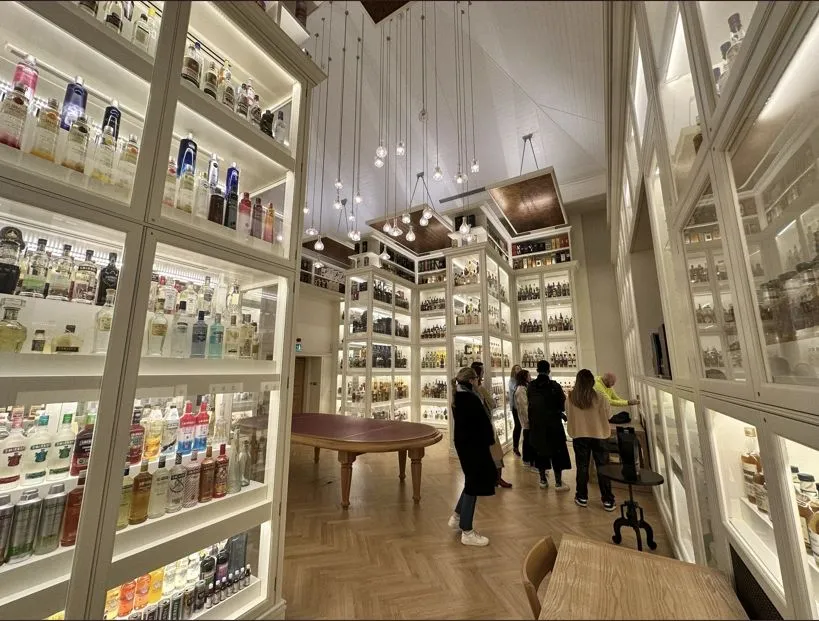
Founded in 1823, Mortlach was the first legal distillery in Dufftown—a distinction worth noting, given the impressive amount of illicit activity occurring in the area at that time. The distillery's pioneering spirit was established by George Cowie, whose son Alexander later introduced the legendary 2.81 times distillation process that defines Mortlach to this day.
This process is, quite simply, the most fiendishly complex distillation regime in Scotland. The wash is split between three wash stills; the low wines are divided, with portions sent to different spirit stills, including the mysterious "Wee Witchie," which triple-distills the weakest feints. The result: a spirit that has been distilled precisely 2.81 times, creating the thick, rich, bold character that has earned Mortlach its fearsome nickname.
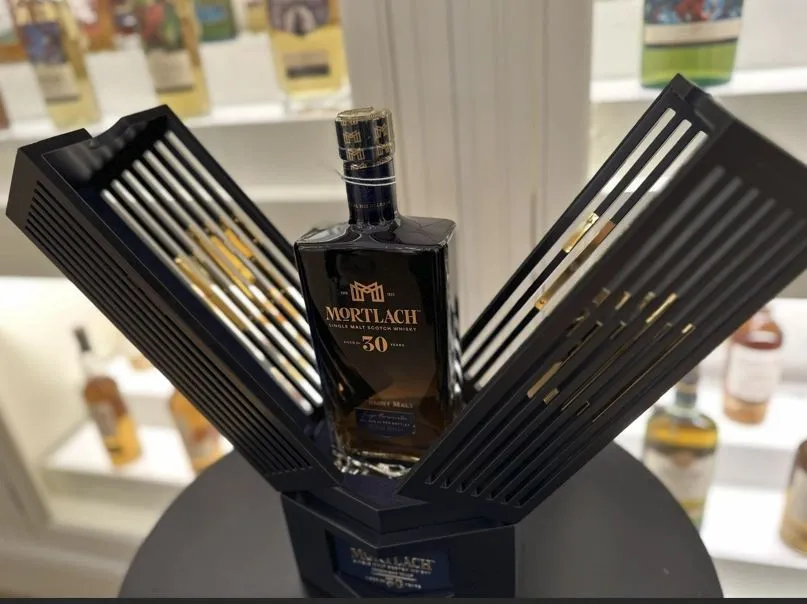
We visited the Speyside Cooperage, watching master craftsmen shape the casks that will hold the spirit for decades. Then came the distillery itself, where the six stills—unchanged since 1897—continue their alchemical work. Standing in that space, watching the spirit flow, I understood why Mortlach has partnered with Philippe Starck as its first-ever Creative Director: this is whisky that demands creative interpretation.
Highland Hospitality
That evening, we arrived at Boath House, a Grade A listed Georgian mansion set within 22 acres of parkland, ornamental lakes, and walled gardens near Nairn. Once described as the most beautiful Regency House in Scotland, it had languished on Historic Scotland's endangered list until Don and Wendy Matheson found it, fell in love, and restored it to its original splendor.
Cocktails and canapés awaited in the drawing room, where candlelight flickered against plaster walls the color of clotted cream. The Mortlach expressions we sampled that night—served alongside a seated dinner featuring local Highland produce—revealed layers of dried fruit, spice, and that distinctive meaty richness that makes this whisky unlike any other.
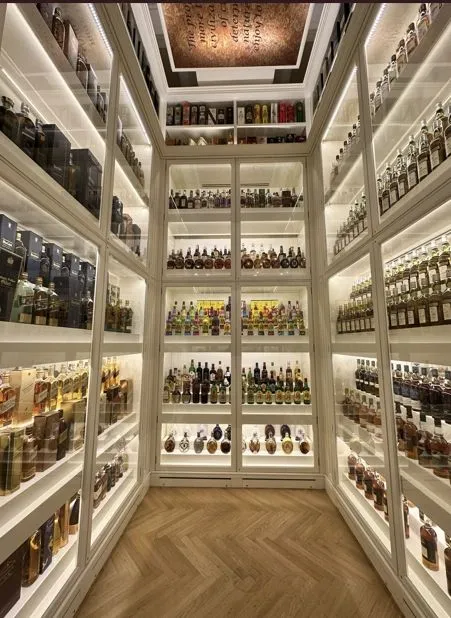
Built in 1825, Boath House now operates as a sanctuary, a creative residency program, and a luxury hotel. The restaurant has earned Michelin recognition, and the 400-year-old walled garden contains a café, store, and studio with a hidden sauna tucked within the grounds. It is, in other words, exactly the kind of place where Scottish tradition and contemporary vision intertwine.
Mountain Makers
The next morning took us deeper into the Highlands, toward the Cairngorm mountains and a visit with Naomi McIntosh and Ben Addy. The husband-and-wife team lives in a series of beautiful small buildings near Braemar, overlooking Balmoral. Naomi is a wood artist working at the intersection of architecture and jewelry—her Sastrugi hanging sculptures were among the pieces I'd admired at Bard. Ben is an architect and founder of Moxon Architects, as well as Tor Workshop, a furniture and cabinetry studio in Braemar.
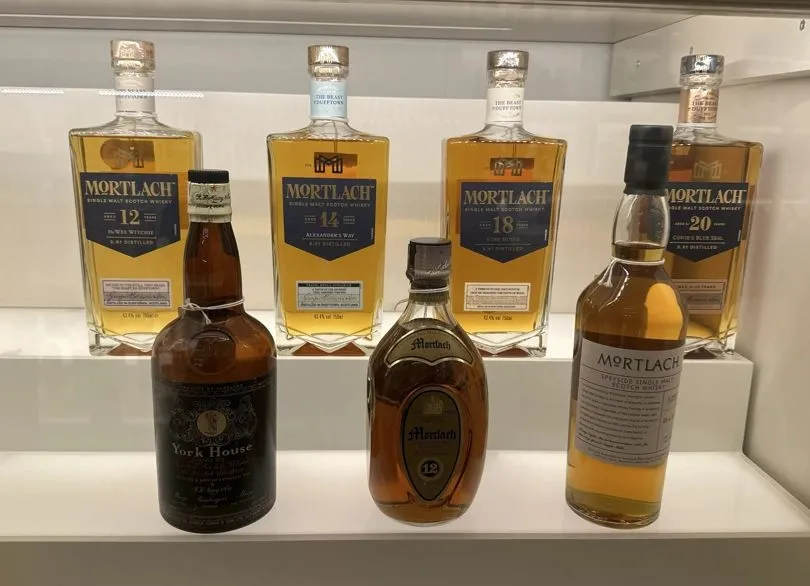
Their work embodies what this trip has taught me: that Scottish design today is not about tartan and tam-o-shanters, but about people finding profound meaning in making things with their hands, in places that inspire them to do their best work. Nearby, I'd learned, Mclean of Braemar continues the ancient tradition of horn carving, creating everything from antler candelabras to sgian dubhs.
We stopped for afternoon tea at Aran Bakery in Dunkeld, the beautiful riverside town in Perthshire that has become something of a food mecca in Scotland. Founded by Flora Sheddon, whose family has transformed the area into a culinary destination, the bakery sits in what locals call "Macbeth territory"—a place where people from around the world come to photograph the forests in autumn.
Our final maker visit was with Mary Arnold-Forster, one of Scotland's most successful new-generation architects. She was preparing to launch Alder, a magazine dedicated to Scottish architects, makers, photographers, and writers who share a love of rural Scotland. Looking through her work, I saw buildings that breathe new life into vernacular tradition—structures that honor the past while serving the present.
The Grand Finale
We returned to Gleneagles—the legendary Perthshire estate itself—for our final evening. Dinner in The Parlour offered a fitting conclusion: modern Scottish cuisine paired with Mortlach expressions, surrounded by the understated grandeur that has made this property a byword for Highland luxury since 1924.
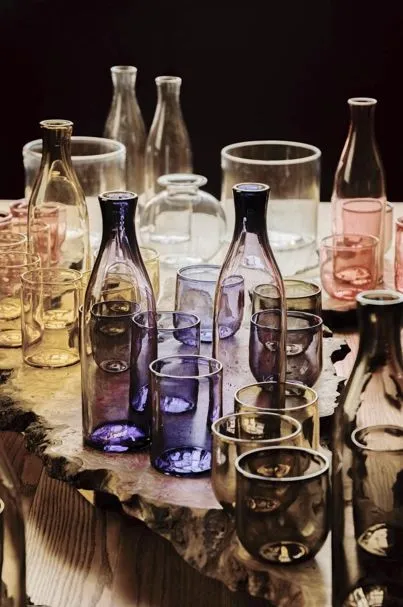
Over 850 acres of stunning countryside, Gleneagles has long been spoken of in reverent tones as a grand Highland dame. But what struck me, after a week immersed in Scotland's contemporary creative scene, was how naturally the old and new coexist here. The same spirit that drove George Cowie to perfect his distillation process in the 1890s drives Hugo and James to reimagine Scottish craft for a global audience, Naomi and Ben to build furniture in the shadow of Balmoral, Juli to transform broken glass into art.
The Design of a Dram
There's a reason Mortlach chose design as the lens through which to share its story. Like the makers we met, the distillery has always done things differently—not for novelty's sake, but because complexity requires commitment. The 2.81 distillation process was not the easy choice; it was the right one.
"Scotland by Design" revealed a country in the midst of a creative renaissance, where young makers are honoring centuries of tradition while pushing boldly into the future. When Bard launches its Spring 2023 exhibition, "100 x 100"—asking 100 Scottish people to each choose an object that embodies contemporary Scotland—it will be another step in redefining what Scottish-ness means in the 21st century.
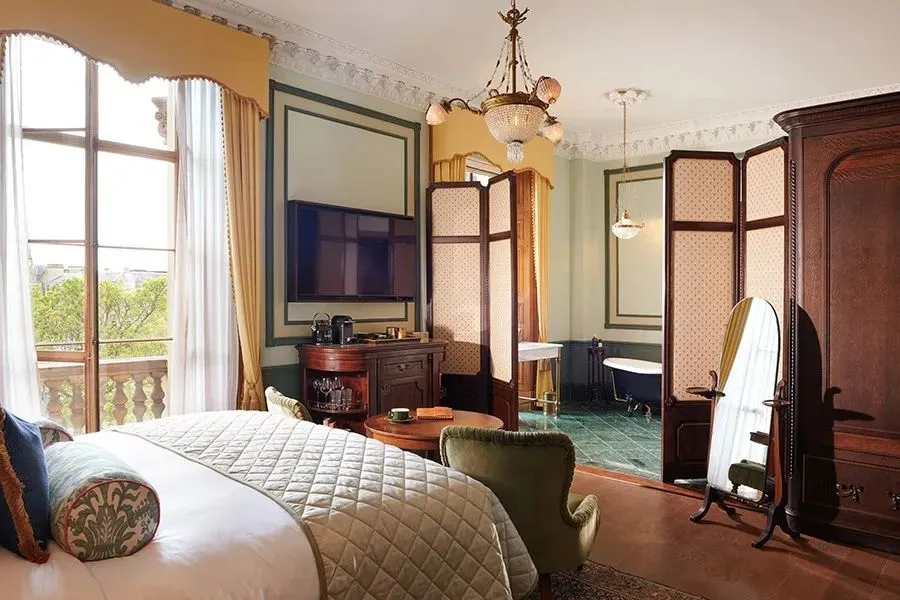
And at the heart of it all, a whisky that has always been, in its own way, a work of design—carefully crafted, fiendishly complex, and utterly itself. The Beast of Dufftown, it turns out, has excellent taste.
If You Go
Gleneagles Townhouse: Located on St Andrew Square in Edinburgh's New Town, this 33-room luxury hotel features The Spence restaurant, Lamplighters rooftop bar, and wellness facilities in the former bank vault.
Bard: 1 Customs Wharf, Leith, Edinburgh. Open seven days a week. Showcases work by more than 35 Scottish makers, including Begg x Co, Timorous Beasties, The Orkney Furniture Maker, and Jasmine Linington. Graphic identity by Studio Frith.
Custom Lane: Edinburgh's center for design and making, featuring gallery space, café by Williams & Johnson Coffee, workshops, Edinburgh Tool Library, and co-working studios.
Boath House: Auldearn, near Nairn. This restored Georgian mansion offers luxury accommodations, Michelin-recognized dining, and 22 acres of grounds, including a 400-year-old walled garden with café and creative residency program.
Gleneagles: The legendary Perthshire estate offers 850 acres of countryside, world-class golf, spa, and dining.
Mortlach: The 2.81-distilled Speyside single malt is available in Rare Old, Special Strength, 18-year-old, and 20-year-old expressions. The Mortlach x Starck collection marks the brand's creative collaboration with Philippe Starck.
The Makers
Begg x Co (cashmere, Ayrshire) • Timorous Beasties (printed textiles, Glasgow) • Juli Bolanos-Durman (glass sculpture, Edinburgh) • Naomi McIntosh (wood sculpture, Cairngorms) • Jasmine Linington (seaweed textiles, Edinburgh) • The Orkney Furniture Maker (furniture, Orkney) • Shetland Woollen Co (wool jumpers, Shetland) • Lindean Mill Glass (mouth blown glass, Galashiels) • Skye Weavers (woven wool, Isle of Skye)
Getting There:Edinburgh Airport offers direct connections worldwide; Gleneagles Townhouse is a 30-minute taxi ride from the airport. Edinburgh Waverley station is a five-minute walk from the Townhouse, with trains arriving direct from London in around four hours.